From special admission for foreigners to choosing your school and major
1. Special Admission for Foreigners
1-(1)Special Admission for Foreigners at a Glance

▪Foreigners enter through a different track than Korean students
Junior colleges run a separate admissions track for international applicants that is completely distinct from the one for Korean students. This means you do not need to take the Korean CSAT (수능, the College Scholastic Ability Test) that domestic students sit for. Instead, you are evaluated holistically based on submitted documents such as your academic records and transcripts, a personal statement, and an interview. Most importantly, the quota for foreign students is set separately from the Korean student quota, so you are not competing head-to-head with Korean applicants but rather within the international track. If you focus your energy on preparing strong documents and interview answers, you have a very real chance of admission.
-
Document Review
High school transcript and graduation certificate; home country academic credential conversion
-
Personal statement & study plan
Three key items: motivation for applying, study plan, and post-graduation career path
-
Interview
Korean language communication assessment; in-person or video call
-
Korean Language Proficiency
TOPIK Level 2–3 or higher, or a school's own Korean language test
The special admission for foreigners does not require the same exam as Korean students. Documents, a personal statement, and an interview are the key components.
- Both parents are foreign nationals, or the applicant holds foreign citizenship
- Completion of a regular 12-year education in the home country (high school graduation)
- Proof of Korean language proficiency (TOPIK or school's own test)
1-(2)6 Eligibility Types for Special Admission for Foreigners
Even within the same "foreign admissions" category, eligibility types differ depending on parents' nationality, the applicant's nationality, and where academic credentials were completed. Each school accepts different types, so be sure to check the admissions guidelines carefully.
| Type | Parents' Nationality | Applicant's Nationality | Overseas Academic Credentials |
|---|---|---|---|
| ① Both parents and applicant are foreign nationals | Both parents are foreign nationals | Foreign national | 12 years completed in home country |
| ② Applicant only is a foreign national (parents are Korean) | Father or mother may be Korean | Foreign national (no Korean citizenship) | 12 years completed in home country |
| ③ Completed 12 years of education abroad | Any nationality | Foreign national | All 12 years (elementary, middle, and high school) completed abroad |
| ④ Overseas Korean national (Korean living abroad) | Korean | Korean | 3 or more years abroad |
| ⑤ Foreign national with Korean academic credentials | Foreign national | Foreign national | Graduated from Korean high school or passed the Korean GED (검정고시) |
| ⑥ Foreign national who completed Korean language study abroad program | Foreign national | Foreign national | 12 years in home country + Korean language study program |
Types ①–③, ⑤, and ⑥ are classified as "special admission for foreigners," while ④ is classified as "special admission for overseas Korean nationals."
1-(3)4 Evaluation Criteria That Vary by School
- High school transcript and graduation certificate are the core documents
- Depending on the school: GPA, class rank, or grade conversion
- If the home country transcript format is different, a separate conversion table may be required
- Apostille or consular confirmation is mandatory
- Three key items: motivation for applying, study plan, and post-graduation career path
- Written in Korean as a rule (some schools allow English)
- Length is typically 1,000–2,000 characters
- If ghostwriting or machine translation is suspected, it will be verified in the interview
- Assessing Korean language communication ability is the top priority
- In-person interview or video interview (Zoom, Teams)
- Re-verification of motivation and personal statement content
- Some departments (cosmetology, culinary) also include a practical skills interview
- Many schools require TOPIK Level 2–3 or higher
- Some schools administer their own Korean language test
- Some schools accept a certificate of completion from a 1-year Korean language program
- Healthcare and nursing programs require TOPIK Level 4 or higher
1-(4)Spring & Fall — international students enroll twice a year
The Korean academic year starts in March. Domestic students usually enroll once in March, but international students can apply for both the spring (March) and fall (September) intakes, and some colleges admit 3–4 times a year.
| Step | Spring (March intake) | Fall (September intake) |
|---|---|---|
| Application | Oct–Nov (prev. year) | Apr–May |
| Result | December | June |
| Registration | February | August |
| Semester starts | March | September |
The special admission for foreigners is calculated separately from the general quota for Korean students. Even if a department has a general quota of 30 students, the foreign student quota is added separately on top of that.
- Legal basis: Article 29, Paragraph 2 of the Enforcement Decree of the Higher Education Act — foreigners may be selected separately outside the regular quota
- Implication: You are not competing for seats with Korean students
- Limit: Some types are subject to a certain percentage of the enrollment quota, while some types (e.g., both parents and applicant are foreigners) have no cap
- In practice: The number of foreign students accepted per department is announced separately on the school's website
It's only half-true that the foreign admissions track is "easier" than the Korean student track. It simply means you don't take the Korean CSAT. In popular departments (nursing, healthcare, aviation), competition ratios among foreign applicants often exceed 5:1. On the other hand, in general departments, under-enrollment means virtually all applicants are accepted. The real answer is that there is a wide gap depending on the school and department.
1-(5)Frequently asked questions
Many students don't realize it, but study abroad in Korea is divided by purpose. The international special admission this page covers is the degree program that leads to a diploma.
- Degree program (international special admission) — A regular 2–4 year program (associate degree / bachelor's top-up) that leads to a diploma. This is the track this page covers.
- Language training — Korean-only courses at a university language institute; no academic credit.
- Exchange student — Studying for one semester to a year under a university partnership while still enrolled at your home university.
- Visiting student — Taking credits as an individual, without a partnership agreement.
- Other short-term (e.g. seasonal sessions) — Short programs held during summer or winter break.
2. Finding a School
2-(1)Finding a College at a Glance
Compare colleges at a glance by region and major with Find a College
With KOREARO's Find a College tool, you can gather and compare junior colleges that recruit international students all in one place — by region, major, and admission requirements. Instead of hunting through each school's website, review objective indicators such as the foreign-student quota, employment rate, and dormitory capacity at a glance. These figures are the most practical yardsticks because they let you gauge your chances of admission, your career prospects after graduation, and the stability of your daily life all at once. For deeper official data, also refer to the government and council sources below.
2-(2)Reference: 4 official sources
- Official study abroad portal of the Korean government (Ministry of Education)
- Integrated school/department search, scholarships, and visa information
- Multilingual support (English, Chinese, Vietnamese, and more)
- The first place to check
- Official council of all junior colleges nationwide
- Academic handbooks, admission statistics, and policy materials
- Check the status of foreign student admissions by school
- Korean-language focused; official data source
- Official university information disclosure site by the Ministry of Education
- Employment rate, number of foreign students, tuition, and scholarships by school
- Statistics down to the department level are also disclosed
- Best for objective comparison
- Admissions office or international affairs office page
- The latest admissions guidelines PDF is the final reference
- Direct email inquiry to the person in charge of foreign students
- May have more up-to-date information than the 3 sites above
- ① Foreign student quota — Is the number of foreign students accepted for the department I want to apply to clearly stated?
- ② Department availability — Is my desired major (e.g., cosmetology, aviation) actually a department that accepts foreign students?
- ③ Dormitory — Priority placement for foreign students, guarantee for the first year, capacity
- ④ Korean language support — Affiliated Korean language institute, Korean supplementary classes within regular curriculum, TOPIK prep class
- ⑤ Employment support — Dedicated career counseling for foreign students, industry-academia partnership companies, track record of E-7 visa conversion
- ⑥ Tuition — National/public (approx. 3–5 million KRW/year) vs. private (approx. 6–9 million KRW/year); percentage of scholarships for foreign students
- ⑦ Region — Fellow-community, part-time job environment, transportation, cost of living
2-(3)Regional Environment for International Students
- Many junior colleges; wide range of school choices
- Many part-time job opportunities and higher hourly wages
- Most expensive cost of living (rent) — at least 1 million KRW per month
- Rich foreign communities and international grocery stores
- Accessibility to Seoul + relatively cheaper housing
- Many part-time job opportunities in manufacturing and logistics
- Cities with a high proportion of foreigners (Ansan, Siheung, Bucheon)
- Close to the airport, making travel back home convenient
- Strong hotel, tourism, and shipbuilding industries
- Lower cost of living compared to Seoul
- High proportion of Vietnamese and Chinese international students
- Many scholarships with regional residency requirements
- Cheapest tuition and cost of living
- Many schools with under-enrollment in foreign student quota → higher chance of acceptance
- Local governments actively offer scholarships for foreigners
- Hourly wages for part-time jobs are lower than in Seoul
Your department, budget, and career goals come before a "famous city." Seoul is not unconditionally better, and a regional area is not at a disadvantage. For example, there are excellent schools in industry clusters — automotive repair in Ulsan/Changwon, hotel culinary in Busan/Jeju, aviation maintenance in Incheon/Cheongju.
※ Use Find a College above to compare schools and majors, and check each school's latest admission guidelines at the official sources.
- Employment rate — Published on University Alimi (overall + by department, based on 6 months after graduation)
- Foreign student graduation rate / dropout rate — "Foreign student status" item on University Alimi
- International accreditation — For healthcare and nursing programs, schools with government accreditation such as KABEA, IEQAS are preferred
- Google reviews / YouTube — Reviews from seniors from the same country are the most candid
- Caution — Private rankings like "QS ranking" or "junior college TOP 10" are for reference only; for foreigners, suitability matters more
This is an English/Korean template to send to the person in charge of foreign students at the international office. You can simultaneously verify whether they can communicate in a foreign language and whether your eligibility is recognized.
Subject: Inquiry about 2027 Spring Admission for International Students — [Country] [Your Name]
Body (English recommended, Korean alongside):
My name is [Your name], a [Country] citizen. I would like to apply for the [Department] in the 2027 Spring semester as an international student.
① Am I eligible if my parents are [parents' nationality]?
② What is the minimum TOPIK level required?
③ Is the application submitted online or by post?
④ Could you send me the latest admission guidelines in English (if available)?
Thank you for your time.
Best regards, [Your name]
※ If you don't receive a response in English, or if the reply is in Korean only, it may indicate that the school's support system for foreign students is limited.
2-(4)Frequently asked questions
3. Major Department Categories at Junior Colleges
3-(1)Key Majors at a Glance
6 key departments most popular among international students
At the heart of foreign student recruitment sit six main fields: K-Culture, Hotel & Tourism, Beauty, Global Business, Culinary & Baking, and Content & Design. These departments attract strong demand from international students and are run with a hands-on, practical focus, making them well suited for building a career in Korea. The key point here is not a school's general prestige but the department's industry-academia network. The stronger a department's pipelines for company-linked practicums, internships, and hiring, the more directly it affects both your employment after graduation and your conversion to an E-7 visa. In other words, which department and which network you join matters more than which school you attend.
We introduce 6 key departments with active foreign student recruitment first. The trend of new departments dedicated to foreign students is rapidly growing, such as the new K-Culture Korean Language department at Anyang University (2026) and Stylist & Beauty Care departments at Jangan University.
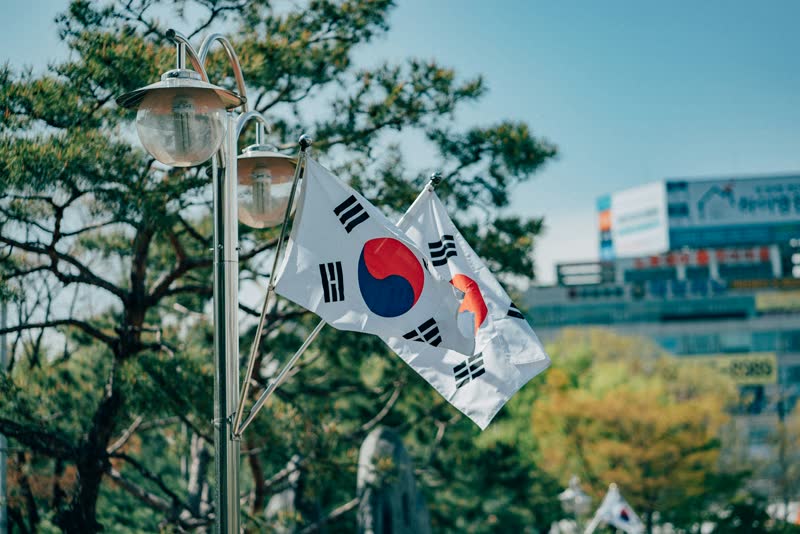
- Korean language education, K-content, cultural exchange, Korean studies
- Rapid increase in new departments dedicated to foreign students (2 in 2024 → 24 in 2026)
- Many new K-Culture departments at Anyang University and other junior colleges
- Post-graduation paths — Korean language instructor, cultural content, interpretation/translation
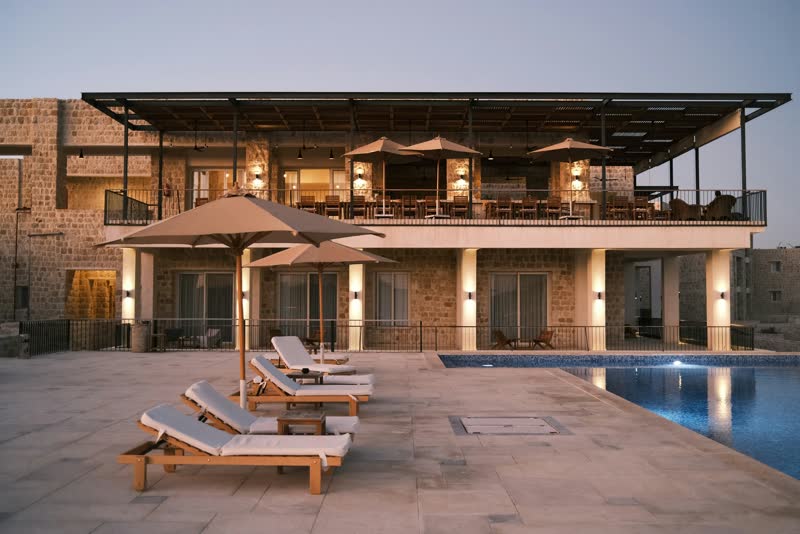
- Hotel management, tourism management, food service industry, airline service
- Practical training-focused; active on-site internships
- Employment linkage with global hotel chains
- E-7-1 (specific activities) / E-7-4 (skilled work) visa conversion

- Skin care, hair design, makeup, nail art
- Very high demand from international students (many from Vietnam and China)
- Linked to national technical qualifications; strong startup prospects in home country
- Active foreign student recruitment in Stylist & Beauty Care departments at Jangan University and others

- International business, trade, commerce, logistics
- Expanded foreign student recruitment in Global Trade & Business departments at Anyang University and others
- Use of 3 languages: Korean + home country language + English
- Post-graduation paths — home country branch offices of Korean companies, trading companies

- Korean, Western, pastry, barista
- Practical training-focused; linked to national technical qualifications (Cook Technician, Baker/Confectioner Technician)
- E-7-1 (hotel manager) / E-7-4 (skilled work) visa conversion
- Active employment linkage with the hotel and food service industries
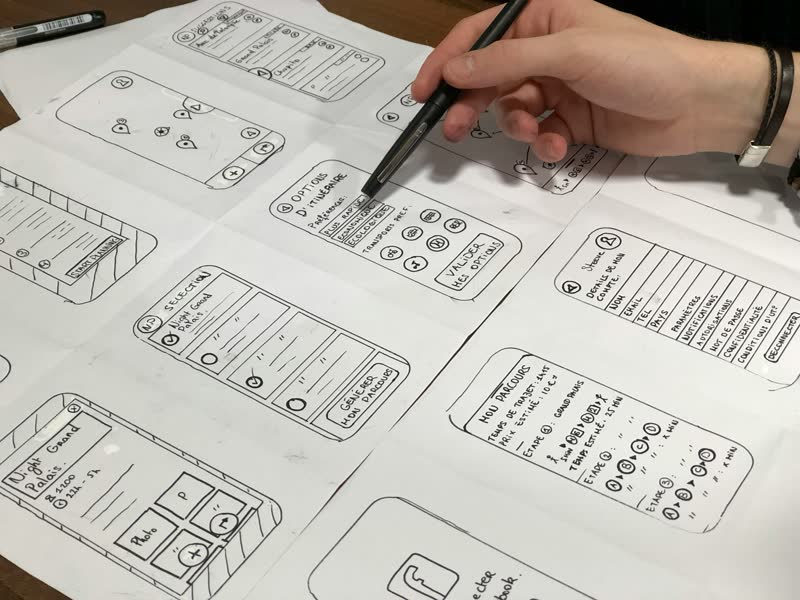
- Video, web, game, visual design
- Training K-content professionals (linked to the government's K-content strategy)
- Portfolio-centered evaluation (for both admission and employment)
- Post-graduation paths — content production, design companies
3-(2)Post-Graduation Career Comparison by Department
| Field | Average Employment Rate (reference) | Key Qualifications | E-7 Visa Conversion |
|---|---|---|---|
| K-Culture & Korean | Medium-high (60–70%) | Korean Language Teacher Certificate, TOPIK Level 6 | E-7-1 (interpretation/translation, cultural content); Korean language instructor career in home country |
| Hotel, Tourism & Food | Medium-high (60–70%) | Hotel Manager, Tourism Interpretation Guide | E-7-1, E-7-4 (hotel manager) |
| Beauty | Medium (60%) | National Cosmetologist, National Esthetician qualifications | Direct E-7 conversion is difficult; strong startup prospects in home country |
| Global Business & Trade | Medium-high (60–70%) | Trade English, International Trade Specialist | E-7-1 (home country branch of Korean company) |
| Culinary & Baking | Medium-high (60–70%) | Cook Technician, Baker/Confectioner Technician, Barista | E-7-1, E-7-4 (skilled work) |
| Content & Design | Medium (60%) | Web Design Technician, GTQ, Computer Graphics Operator Technician | E-7-1 (portfolio + salary requirements) |
| Healthcare & Nursing (reference) | High (80%) | Nursing assistant, dental hygienist, and other national licensing exams | E-7-2 (limited; domestic license required) |
| Automotive & Machinery (reference) | High (70%) | Automotive Repair Technician / Engineer | E-7-1, E-7-4 (skilled work) |
| IT & Software (reference) | Medium-high (70%) | Engineer Information Processing (정보처리기사), SQLD | E-7-1 (developer) — active |
※ Employment rates are simplified reference figures based on the average by department as published on University Alimi, and may vary by ±10% or more depending on the school and year. E-7 visa conversion eligibility changes according to the Ministry of Justice's occupation-specific notice (updated once a year).
- ① I want to find employment in Korea quickly → Hotel/tourism/food service, culinary/baking, content/design (fields with high industry demand)
- ② I want to obtain a Korean national qualification certificate → Cosmetology/beauty, culinary/baking (graduation = exam eligibility or bonus points)
- ③ I want to use my skills in my home country → K-Culture/Korean language, global business/trade, cosmetology/beauty (demand for K-content, K-beauty, Korean company home country branches)
- ④ I want to settle permanently in Korea (permanent residency/citizenship) → Hotel/food service/culinary with strong E-7 conversion (E-7-4 skilled work), global business, or F-6 route after marriage
- ⑤ My TOPIK score is low → Content/design, culinary (relatively lower Korean language entry barrier due to high portfolio/practical skills weighting)
- ⑥ Korean language and culture is my core interest → K-Culture/Korean language (rapidly growing number of dedicated foreign student departments, including new ones at Anyang University in 2026)
- Vietnam — Cosmetology/beauty, hotel/tourism/food service, culinary/baking, K-Culture/Korean language. After graduating in Korea, many either enter Korean-affiliated companies in Vietnam or settle in Korea.
- Uzbekistan — Global business/trade, hotel/tourism/food service, culinary (+ automotive repair for reference). High demand for Korean companies in the home country; high proportion aiming to settle in Korea and obtain permanent residency.
- Mongolia — Hotel/tourism/food service, cosmetology/beauty, K-Culture/Korean language (+ healthcare/nursing for reference). Particularly high demand for Korean language education.
- China — Content/design, global business/trade, K-Culture/Korean language. Academic credential recognition is prioritized; a higher proportion plan to return to and use their skills in the home country compared to other nationalities.
※ The patterns above are general trends synthesized from statistics on the major distribution of international students from the Ministry of Education and Ministry of Culture, Sports and Tourism, and KCCE data. Individual aptitude and goals take priority.