Korea's location, population, administrative divisions, climate, and language — the starting point for everything.
1. Overview of Korea
1-(1)South Korea at a Glance
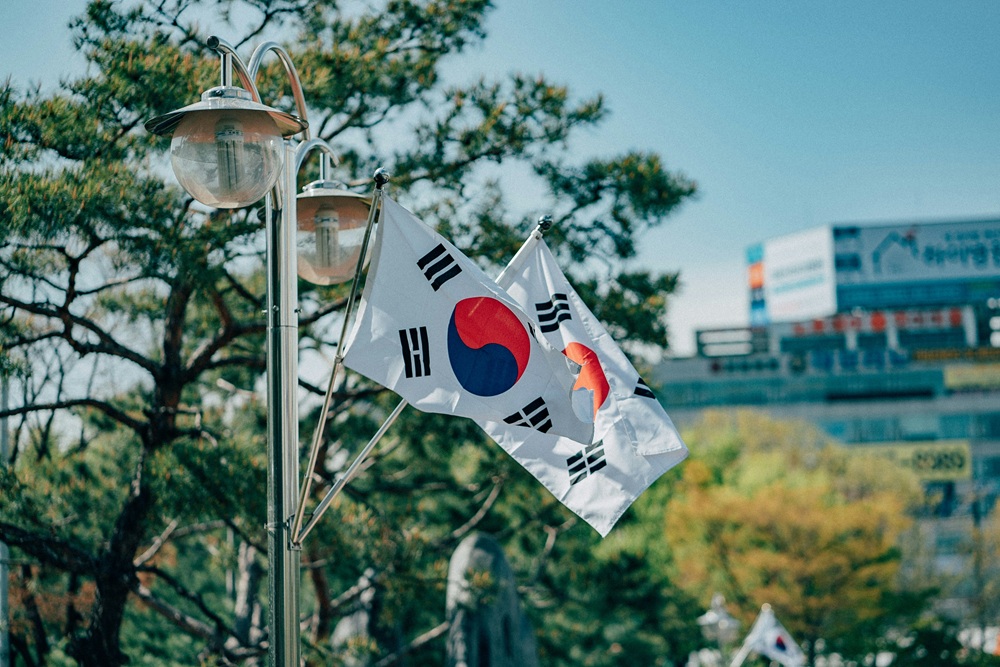
▪A divided country in the south of the Korean Peninsula in East Asia
The Republic of Korea (South Korea) is a country occupying the southern half of the Korean Peninsula in East Asia. To the north, it borders North Korea along the Armistice Line (the Military Demarcation Line), and as a peninsular nation surrounded by sea on its eastern, western, and southern sides, travel to and from other countries is only possible by air or by ship. Because about 70% of its territory is mountainous, the population is highly concentrated in the plains and urban areas, which leads to one of the highest population densities in the world.
Its total land area is roughly 100,000 km² — relatively small compared with Vietnam, Uzbekistan, or Mongolia — yet as of 2026 its total population reaches about 51.1 million. In particular, more than half of the entire population is concentrated in the Capital Area encompassing Seoul, Incheon, and Gyeonggi Province, making this region the practical central axis of the Republic of Korea's politics, economy, and culture. The Capital Area is equipped with a highly developed public transport network, systematic living infrastructure, and a stable public-safety environment, providing conditions in which even international students just beginning their life in Korea can adapt relatively quickly and live safely.
1-(2)Key Facts Summary
-
Political system
South Korea is a republic founded on liberal democracy, adopting a presidential system in which the president, as head of state, leads the executive branch. The president serves a single five-year term; re-election is not permitted under the Constitution, which institutionally prevents the concentration of power and prolonged one-person rule.
-
Currency
The legal tender of South Korea is the Korean Won (symbol: ₩, code: KRW). As of June 2026, USD 1 trades at around the low 1,500-won range, but the exchange rate fluctuates constantly with international financial market conditions. Be sure to check the latest exchange rate before departing for Korea.
-
Key industries
The Korean economy is structured around the joint growth of high-value-added manufacturing and cultural content industries. The semiconductor industry, led by Samsung Electronics and SK hynix, holds the world's first- and second-largest shares of the global memory market and accounts for more than about 15% of Korea's total exports. The Hyundai-Kia automotive group has grown into one of the world's top-three automakers by global sales, and the shipbuilding industry likewise leads the high-value-added vessel market with world-class technology. On top of this, the K-content industry — represented by K-dramas and K-POP — drives the worldwide Korean Wave (Hallyu) and raises the nation's brand value.
-
Entry route
Because of the division of the Korean Peninsula, crossing the border by land is impossible, and all international arrivals and departures take place by air or by sea. The main gateway for international flights is Incheon International Airport (ICN), about an hour from downtown Seoul via the Airport Railroad (AREX) or limousine bus. Short-haul international and domestic flights use Gimpo International Airport (GMP), and international airports also operate in major cities such as Busan and Jeju.
1-(3)Frequently asked questions
In fact, millions of international students, tourists, and overseas Koreans visit the country each year without any restrictions, and major cities such as Seoul, Busan, and Daegu offer public safety and living security on par with developed nations. The area around the Military Demarcation Line (DMZ) is a special zone where civilian access is strictly controlled and is completely separated from the ordinary radius of student and daily life, so you will never approach it unless you intentionally go there. Studying in Korea is by no means inferior in safety to other developed countries — a point already proven by the hundreds of thousands of international students currently living in Korea.
That said, as in any country, basic caution is needed depending on the place and situation. Be especially wary of nightlife and club districts in the small hours, deserted alleys, and illegal currency exchange or fake real-estate scams that target foreigners. Also, make a habit of personally keeping your phone and wallet with you even when you briefly leave your seat at a cafe or restaurant. Cases occasionally occur where people suffer theft after literally following the saying that "in Korea it's safe to leave your belongings on the table and step away," so manage your belongings thoroughly in public places anywhere.
Gimpo International Airport (GMP) mainly handles domestic flights and short-haul international routes connecting neighboring countries such as Japan, China, and Taiwan. Its strength is easy access to downtown Seoul, but it does not operate long-haul international flights.
If your school is located in a regional city such as Busan, Daegu, or Gwangju, you can transfer directly from Incheon Airport to the KTX, a domestic flight, or an express bus for a convenient trip. Travel times and fares for each mode vary by destination, so it is advisable to check your route in advance before departure.
That said, the language barrier may make the first encounter a bit awkward, and you may receive curious looks from some older people or in areas with little contact with foreigners. However, such looks usually stem from simple curiosity rather than hostility, so there is no need to feel overly intimidated. Koreans tend to respond much more warmly when you offer even a simple greeting in Korean, so learning basic Korean expressions in advance is a great help in adjusting to life in Korea.
2. Administrative divisions — capital area vs. non-capital regions
2-(1)Administrative Divisions at a Glance
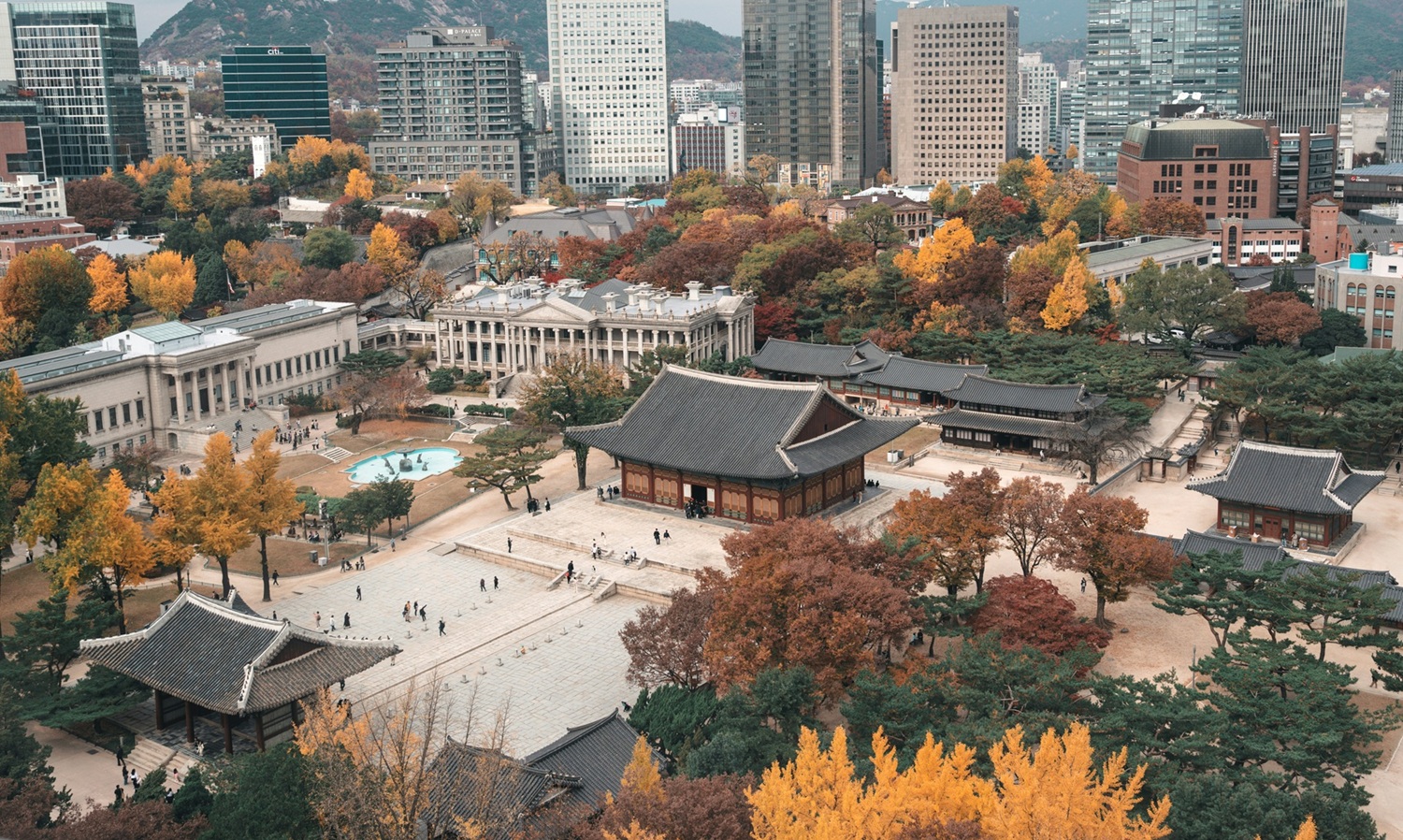
▪17 metropolitan/provincial governments — effectively a "capital vs. non-capital" structure
The administrative divisions of South Korea consist of a total of 17 major administrative units: 1 special city (Seoul), 6 metropolitan cities (Busan, Daegu, Incheon, Gwangju, Daejeon, Ulsan), 1 special self-governing city (Sejong), and 9 provinces (do). In real life, however, a far simpler dichotomy is much more widely used than these 17 units — namely the divide between the 'Capital Area', which groups Seoul, Incheon, and Gyeonggi Province, and the 'non-Capital Area (the provinces)' that refers to all other regions.
The reason this distinction carries meaning beyond a simple geographic classification is clear. More than half of the entire population — about 26 million people — is concentrated in the Capital Area, which makes up only about 12% of the nation's land area, and the headquarters of major corporations, prestigious universities, and core jobs are likewise concentrated in this small region. As a result, a tangible gap exists between the Capital Area and the non-Capital Area across housing costs, job opportunities, and living infrastructure as a whole.
This distinction also carries very practical significance from an international student's perspective. Depending on whether the school you attend is located in the Capital Area or in a provincial region, your rent and living costs, the quantity and quality of part-time job opportunities, and even your post-graduation employment and visa-conversion path can all differ. Before choosing a school, it is important to consider both the area's living environment and your post-graduation path together.
2-(2)The Capital Area and Non-Capital Area in Detail
South Korea's administrative divisions are organized into a total of 17 metropolitan and provincial governments according to their character and scale.
-
1 Special City — Seoul
As the capital of South Korea, it is the overall center of politics, economy, and culture. With about 9.3 million residents (as of 2026), it is the country's largest city and home to the highest concentration of international students nationwide.
-
6 Metropolitan Cities — Busan, Daegu, Incheon, Gwangju, Daejeon, Ulsan
An administrative status granted to large cities with a population of over one million. They serve as the economic and cultural hubs of their respective regions and are also major cities where many junior-college international students live.
-
1 Special Self-Governing City — Sejong
An administration-centered multifunctional city launched in 2012, to which numerous central government ministries — including the Office for Government Policy Coordination — have relocated. As a planned city, it has well-developed living infrastructure and is a rapidly growing emerging city.
-
6 Provinces — Gyeonggi, Chungbuk, Chungnam, Jeonnam, Gyeongbuk, Gyeongnam
General wide-area administrative divisions excluding metropolitan cities; each province contains numerous cities and counties. Junior colleges are distributed throughout the country, so they are closely tied to international students' living areas.
-
3 Special Self-Governing Provinces — Jeju, Gangwon, Jeonbuk
Administrative divisions granted a higher level of autonomy than ordinary provinces, to expand self-governing authority suited to regional characteristics. Jeju Special Self-Governing Province was launched in 2006, Gangwon in 2023, and Jeonbuk in 2024. In particular, these regions actively implement foreigner settlement support policies to cope with population decline, and they often offer favorable conditions for international students in terms of scholarships and employment-visa benefits.
It refers to Seoul + Incheon + Gyeonggi-do together. They make up only about 12% of Korea's land, yet hold about 26 million people — half the country packed into this small area. Most corporate headquarters, universities, hospitals, and cultural facilities are concentrated here, so Korean society effectively revolves around the capital area.
| Item | Capital area (Seoul, Incheon, Gyeonggi) | Non-capital regions (provinces) |
|---|---|---|
| Population density | Very high (Seoul about 15,000 people/km²) | Low (Gangwon about 90 people/km²) |
| Rent & living cost | High (studio rent 600,000–1,000,000 won range) | Low (studio rent 250,000–400,000 won range) |
| Job opportunities | Concentration of large/foreign company HQs | Mainly manufacturing, factories, local industry |
| University & cultural infrastructure | Major universities, performances, shopping concentrated | Centered on key regional universities; facilities dispersed |
| Policy benefits for international students | Standard | Local scholarships, foreign quotas, work-visa preference |
| Tuition & living cost | Many part-time jobs, so you can support yourself | Rent and living costs are simply lower, plus local scholarships |
| Part-time work | High hourly pay and many jobs (convenience stores, cafes, restaurants) | Low competition, warm-hearted people, long-term jobs possible |
| People from your country | Plenty of home-country communities and grocery stores | Smaller community, so your Korean improves faster |
| Employment after graduation | Interview opportunities at large/foreign company HQs | Employment preference via the regional E-7-M visa |
| Stress | High — commuting, density, competition | Low — a more relaxed life is possible |
To slow population decline outside the capital area, the Korean government and local authorities offer various benefits to foreigners who settle in the provinces.
- E-7-M visa (regional): a special work visa granted when you graduate from a junior college in a non-capital region and take a qualifying local job
- Local-government scholarships: some provincial cities and provinces fund tuition and living costs for international students from their own budgets
- Foreign-quota advantage: provincial colleges have more room in their foreign-student quotas, so admission chances are relatively higher
Capital area vs. non-capital regions — which is better?
Which is more advantageous between the Capital Area and the non-Capital Area depends on each person's goals and circumstances. The Capital Area offers abundant part-time jobs and a wide range of living infrastructure, but the burden of housing and living costs is relatively high. The non-Capital Area often has low living costs and substantial policy benefits for international students — such as local-government scholarships and E-7-M visa preferences — which can be genuinely advantageous for students planning their studies together with post-graduation employment and residence. Before choosing a school, we recommend reviewing both the area's living-cost level and your post-graduation visa path together.
2-(3)Frequently asked questions
▪ Daejeon — the central city of the Chungcheong region, located in the middle of the Korean Peninsula, about one hour from Seoul by KTX. With many universities and national research institutes clustered there, it has a strong character as an education and research city, and overall offers a calm and stable living environment.
▪ Daegu — located inland in the Gyeongsang region, about one hour and 40 minutes from Seoul by KTX. Many junior colleges are distributed there, and because summer temperatures are very high, it is sometimes nicknamed 'Daefrica.'
If your school is already decided, simply choose that city. If you still have a choice, Daejeon — a transport hub conveniently accessible from anywhere in the country — may be advantageous for early adjustment.
3. Climate and the four seasons
3-(1)Korea's Four Seasons
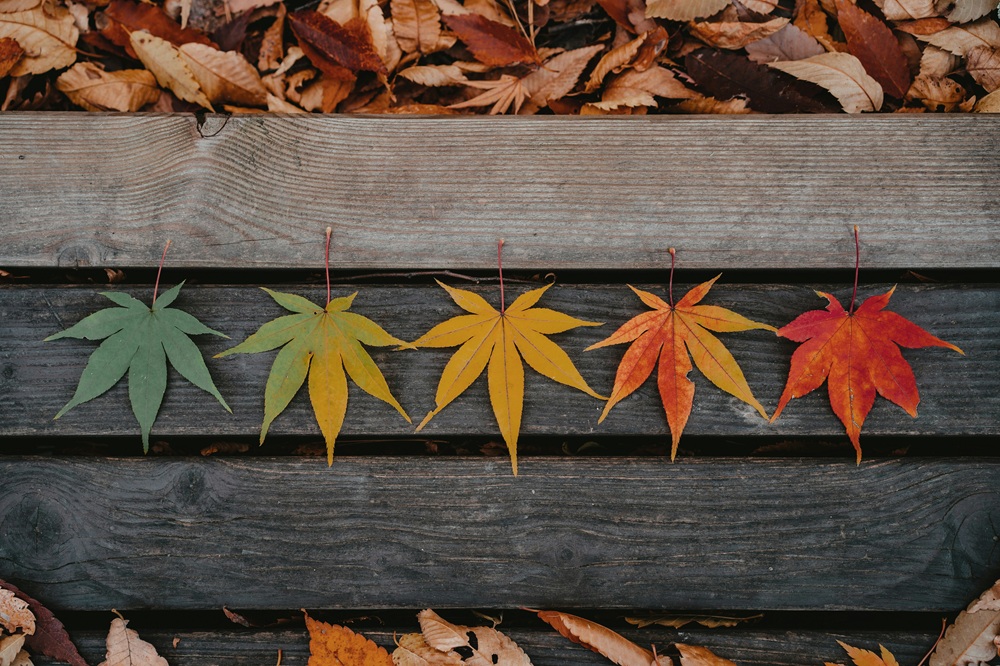
▪A temperate climate with distinct spring, summer, autumn, and winter
South Korea has a mid-latitude temperate climate, with four clearly distinct seasons — spring, summer, autumn, and winter. Spring (March–May) brings mild temperatures and blossoming flowers, but it is also the season when yellow dust and fine dust blown in from the deserts of China and Mongolia are at their worst. Summer (June–August) comes with concentrated monsoon rainfall, high humidity, and heat exceeding 30°C, sometimes feeling similar to the rainy season in Southeast Asia. Autumn (September–November) is considered the most pleasant season in Korea, combining clear skies, cool temperatures, and autumn foliage. Winter (December–February) brings cold, dry weather with temperatures dropping to around −10°C, and caution is needed against falls caused by snow and ice.
Even within the same city, the temperature gap between summer and winter reaches 30–40°C, so clothing changes completely with each season and separate costs arise for summer cooling and winter heating. Both students from Vietnam or Southeast Asia, where temperatures barely change year-round, and students from Mongolia or Central Asia, who are used to severe cold but unfamiliar with heat and high humidity, generally need a considerable adjustment period to Korea's seasonal changes at first. Checking seasonal clothing and daily necessities in advance before arrival helps with early settlement.
The average temperature is about 13°C; days are warm, but the gap between daytime and morning/evening is large. In early-to-mid April, cherry blossoms bloom nationwide, and many schools and regions hold spring festivals. However, this is also the period when yellow dust and fine dust levels are at their highest of the year, so it is good to make a habit of wearing a KF94 mask when going out.
The average temperature is about 25°C, rising to 30–35°C at midday. From late June to late July is the rainy season (jangma), with rain almost every day, and in August–September typhoons can bring strong winds and heavy downpours. High temperatures combined with humidity can feel even more humid than the rainy season in Southeast Asia, so even students used to heat need separate preparation.
The average temperature is about 17°C, and with clear, dry weather it is the most pleasant season in Korea. Autumn-foliage festivals and cultural events are held across the country, providing ideal conditions for outdoor activities. However, temperatures drop quickly from late October, so it is good to prepare a coat in advance.
The average temperature is around 0°C; in the morning it drops to −5 to −10°C, and during cold waves it can fall below −15°C. Falls caused by snow and ice are frequent, so wearing anti-slip winter footwear is recommended. The dry weather also tends to cause skin trouble and respiratory discomfort, so pay special attention to moisturizing.
3-(2)Climate Comparison and Seasonal Preparation
Compared with your home climate
| Home country | Home climate | Hardest thing to adjust to in Korea |
|---|---|---|
| Vietnam (south) | 25–32°C all year, rainy and dry seasons | Korea's winter cold — first time experiencing sub-zero temperatures |
| Uzbekistan | Summer 40°C, winter sub-zero — continental extremes | Korea's high humidity and summer monsoon |
| Mongolia | Bitter −30°C winter, very dry | Korea's monsoon and heavy rain and the summer heat |
| China (south) | Mild and humid | Korea's winter cold snaps and large day-night temperature swings |
Korean winters are not just cold — snow and ice make the roads very slippery. Many people are injured in falls on icy paths every year. Before and after arrival, be sure to prepare a thick padded coat, non-slip winter boots, hand warmers, and moisturizing cream. Winter heating also adds about 50,000–150,000 won per month, so be sure to include it in your budget.
Seoul monthly average temperature & rainfall (1991–2020 normals)
Based on the 30-year climate normals officially published by the Korea Meteorological Administration. For first-timers in Korea, the most striking facts are that winter (Dec, Jan, Feb) drops below freezing and that nearly 400mm of rain falls in July alone. (Busan and Jeju are warmer than Seoul, while Gangwon and inland areas such as Daejeon and Daegu can get colder in midwinter.)
| Month | Avg temp (°C) | Avg. low–high (℃) | Avg. rainfall (mm) | In a word |
|---|---|---|---|---|
| January | -2.0 | -5.5 ~ 2.1 | 16.8 | Coldest of the year, little rain or snow · down to below −15°C in cold snaps |
| February | 0.7 | -3.2 ~ 5.1 | 28.2 | Still sub-zero at times, dry · down to below −15°C in cold snaps |
| March | 6.1 | 1.9 ~ 11.0 | 36.9 | Start of spring, big day-night swings, yellow dust |
| April | 12.6 | 8.0 ~ 17.9 | 72.9 | Cherry-blossom season, coat needed |
| May | 18.2 | 13.5 ~ 23.6 | 103.6 | Clear and pleasant, good for outdoor activities |
| June | 22.7 | 18.7 ~ 27.6 | 129.5 | Start of the monsoon |
| July | 25.3 | 22.3 ~ 29.0 | 414.4 | Heaviest rain, hot and humid · up to above 35°C in heat waves |
| August | 26.1 | 22.9 ~ 30.0 | 348.2 | Hottest of the year, typhoons · up to above 35°C in heat waves |
| September | 21.7 | 17.7 ~ 26.2 | 141.5 | Start of clear autumn |
| October | 15.0 | 10.6 ~ 20.2 | 52.2 | Autumn foliage, coats start in earnest |
| November | 7.5 | 3.5 ~ 11.9 | 51.1 | Late autumn / early winter |
| December | 0.2 | -3.4 ~ 4.2 | 22.6 | Full winter, first snow · down to below −15°C in cold snaps |
Seasonal clothing and expected costs
- Light coat, cardigan, trench coat
- Long-sleeve T-shirt + jeans
- Yellow-dust mask (KF94)
- Expected extra spending about 100,000 won
- Short sleeves, shorts, breathable clothes
- Portable fan, parasol, sunscreen
- Folding umbrella + rain poncho
- Expected extra spending about 80,000 won
- Light knit, sweatshirt, jacket
- Thick coat from late October
- Layered outfits for day-night temperature swings
- Expected extra spending about 150,000 won
- Thick padded coat (essential), scarf, gloves, beanie
- Thermal underwear (Heattech), fleece-lined pants, non-slip boots
- Hand warmers, lip balm, moisturizing cream
- Expected extra spending 200,000–300,000 won
3-(3)Frequently asked questions
- From Vietnam, Malaysia, the Philippines — compared with home countries above 25°C all year, Korean winter is your first sub-zero experience in life and feels very cold. A padded jacket, thermal underwear and gloves are essentials, not options.
- From Mongolia, Russia, Kazakhstan — since winters at home drop to −20 to −30°C, the temperature itself actually feels milder. But the high humidity makes many describe it as "a cold that gets into your clothes."
- From Uzbekistan, northern China — similar to home, but Korea is more humid so the cold feels stronger.
- From Vietnam / Southeast Asia — you often have no winter clothes at all back home. Especially if you arrive after November, buy a padded jacket, thermal underwear (heat-tech) and gloves within a week of arriving. Uniqlo, TopTen, Daiso and Olive Young offer good value. As sub-zero weather is new to you, be especially careful of slipping on icy roads.
- From Uzbekistan / Kazakhstan — coming from a dry climate, Korea's summer humidity and monsoon are the biggest adjustment. Prepare breathable clothing and a small dehumidifier or moisture absorbers, and watch out for mold.
- From Mongolia — Korean winters may feel milder, but the summer heat and heavy downpours are new experiences. Bring a thin raincoat, a portable fan and breathable clothes.
- From southern China / Southeast Asia — spring yellow dust and pollen can suddenly trigger allergies (rhinitis, conjunctivitis). Prepare KF94 masks and allergy medicine in advance, and go out less on 'Bad' air-quality days.
4. Language and Hangul
4-(1)Korean and Hangul — Overview
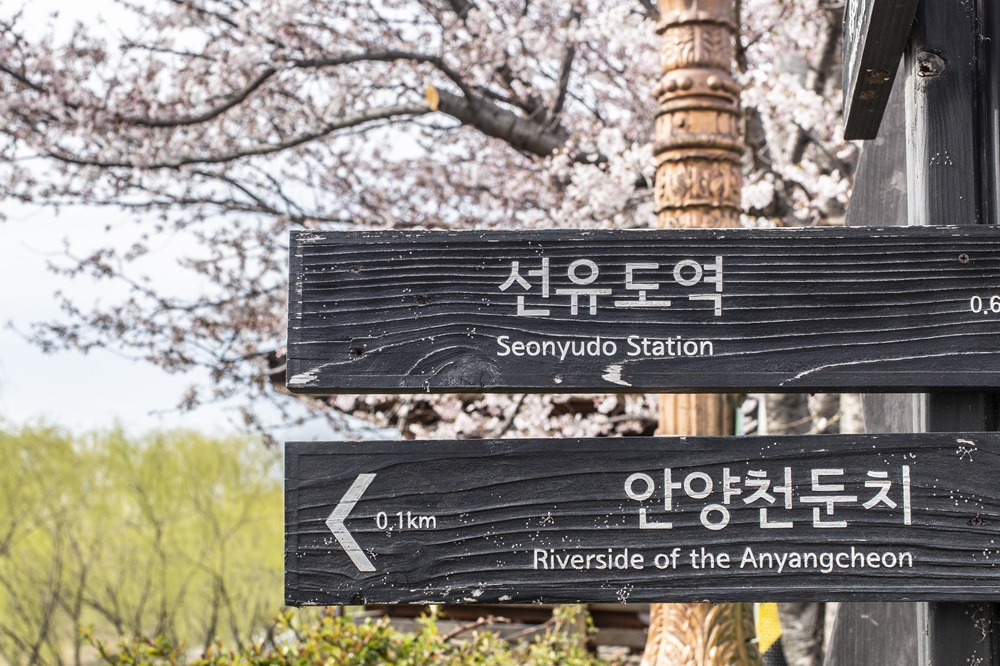
▪A single-language society that runs almost entirely on Korean
South Korea is, in practice, a single-language society that uses only Korean. Unlike India with its many official languages, or the Philippines where English is widely spoken day to day, here most government offices, hospitals, and part-time workplaces operate entirely in Korean. The writing system, Hangul, was scientifically designed to spell words as they sound, so you can learn to read and write it within a few days — but listening and speaking take much longer to master. Downtown Seoul and tourist spots have English signs, but step just outside them and English rarely works, so Korean becomes the key tool for following classes, making friends, and finding a job. That is why many universities require a TOPIK (Test of Proficiency in Korean) level for admission or graduation.
- The unique script for writing Korean
- A script created directly by King Sejong in 1443 (promulgated in 1446)
- 14 consonants + 10 vowels = 24 basic letters
- A phonetic script written as it sounds → just memorize the letters and you can read even unknown words
- Linguists worldwide rate it as "the most scientific script"
- In daily life, Chinese characters are barely used
- They appear only in some newspaper headlines, legal documents, and old signs
- School classes, social media, and menus are 100% Hangul
- Students from China or Japan get a slight edge in memorizing words from their knowledge of Chinese characters
How well does English work?
| Place | How well English works | Actual situation |
|---|---|---|
| Incheon Airport, tourist sites, hotels | Works well | Signs in Korean/English/Chinese/Japanese; staff can respond in English |
| Subway, bus | Multilingual signs / announcements in Korean & English | No problem getting around |
| Ordinary restaurants, convenience stores, cafes | Limited | Young staff manage simple English; mostly Korean is needed |
| Government offices, banks, hospitals | Barely works | Korean or an interpreter is essential |
| Junior-college classes & exams | Barely works | Lectures, assignments, and presentations are all in Korean (English-taught courses exist only at some 4-year universities) |
Without Korean you can get by in daily life somehow, but studying, part-time work, relationships, and employment are nearly impossible without it. Learning to read Hangul and basic conversation before arrival is the best investment you can make.
Once you master the shapes and pronunciation rules of Hangul's 14 consonants + 10 vowels, you can read almost any sign on the street in as little as a day, or a week at most. You can pronounce words even without knowing their meaning, which makes searching and translating subway stations, menus, and medicine names far easier. We strongly recommend starting with the Hangul alphabet chart before you arrive.
4-(2)Reading and Writing Hangul
Hangul alphabet chart — 14 consonants · 10 vowels
| Hangul | Name | Romanization |
|---|---|---|
| ㄱ | Giyeok | g / k |
| ㄴ | Nieun | n |
| ㄷ | Digeut | d / t |
| ㄹ | Rieul | r / l |
| ㅁ | Mieum | m |
| ㅂ | Bieup | b / p |
| ㅅ | Siot | s |
| ㅇ | Ieung | none / ng (as a final consonant) |
| ㅈ | Jieut | j |
| ㅊ | Chieut | ch |
| ㅋ | Kieuk | k |
| ㅌ | Tieut | t |
| ㅍ | Pieup | p |
| ㅎ | Hieut | h |
| Hangul | Romanization | Pronunciation example |
|---|---|---|
| ㅏ | a | as in "아빠" (appa, dad) |
| ㅑ | ya | as in "야구" (yagu, baseball) |
| ㅓ | eo | as in "어머니" (eomeoni, mother) |
| ㅕ | yeo | as in "여자" (yeoja, woman) |
| ㅗ | o | as in "오빠" (oppa, older brother) |
| ㅛ | yo | as in "요리" (yori, cooking) |
| ㅜ | u | as in "우유" (uyu, milk) |
| ㅠ | yu | as in "유리" (yuri, glass) |
| ㅡ | eu | as in "으악" (euak, yikes) |
| ㅣ | i | as in "이름" (ireum, name) |
You combine consonants and vowels to form syllables (e.g., ㄱ+ㅏ=가). Including final consonants, about 11,172 combinations are possible.
4-(3)Basic Expressions and Learning Korean
20 Korean greetings & expressions worth knowing
| Korean | Romanization | Meaning / when to use |
|---|---|---|
| 안녕하세요 (annyeonghaseyo) | Annyeonghaseyo | Hello (the basic greeting for any meeting) |
| 안녕히 가세요 (annyeonghi gaseyo) | Annyeonghi gaseyo | Goodbye (to someone who is leaving) |
| 감사합니다 (gamsahamnida) | Gamsahamnida | Thank you |
| 죄송합니다 (joesonghamnida) | Joesonghamnida | I'm sorry |
| 괜찮아요 (gwaenchanayo) | Gwaenchanayo | It's okay (also strongly means "no, thanks" / declining) |
| 네 / 아니요 (ne / aniyo) | Ne / Aniyo | Yes / No |
| 얼마예요? (eolmayeyo) | Eolmayeyo? | When asking the price |
| 이거 주세요 (igeo juseyo) | Igeo juseyo | When you want to order/buy this |
| 도와주세요 (dowajuseyo) | Dowajuseyo | When you need help |
| 잘 모르겠어요 (jal moreugesseoyo) | Jal moreugesseoyo | I don't know / I'm not sure |
| 한국말 잘 못해요 (hangungmal jal motaeyo) | Hangungmal jal motaeyo | I can't speak Korean well |
| 천천히 말해 주세요 (cheoncheonhi malhae juseyo) | Cheoncheonhi malhae juseyo | Asking someone to speak slowly |
| 화장실 어디예요? (hwajangsil eodiyeyo) | Hwajangsil eodiyeyo? | Asking where the restroom is |
| 병원 어디예요? (byeongwon eodiyeyo) | Byeongwon eodiyeyo? | Asking where the hospital is (in an emergency) |
| 이거 매워요? (igeo maewoyo) | Igeo maewoyo? | Is this spicy? (at a restaurant) |
| 안 맵게 해 주세요 (an maepge hae juseyo) | An maepge hae juseyo | Please make it not spicy (at a restaurant) |
| 물 좀 주세요 (mul jom juseyo) | Mul jom juseyo | Some water, please |
| 계산해 주세요 (gyesanhae juseyo) | Gyesanhae juseyo | Check, please (at a restaurant) |
| 여기요! (yeogiyo) | Yeogiyo! | "Jeogiyo / Yeogiyo" — to call a staff member |
| 이름이 뭐예요? (ireumi mwoyeyo) | Ireumi mwoyeyo? | What's your name? |
Free Korean-learning resources
- Online Sejong Institute (nuri.iksi.or.kr) — run by the King Sejong Institute Foundation under the Ministry of Culture, Sports and Tourism. After signing up, you can take beginner/intermediate/advanced Korean courses and e-books for free from anywhere in the world. It offers a multilingual interface in English, Chinese, Japanese, Vietnamese, Uzbek, Mongolian, and more.
- National Institute of Korean Language "Basic Korean Dictionary" — a bilingual dictionary in 11 languages, for studying words and example sentences.
- EBS Korean (radio.ebs.co.kr) — EBS's Korean radio and video content for foreigners. Focused on pronunciation and basic conversation
- TalkToMeInKorean (talktomeinkorean.com) — privately run. Rich step-by-step free podcasts and videos; English-based explanations make it beginner-friendly
- University-affiliated Korean institutes — for serious study after arrival, use a university language institute (Yonsei, Korea, Sogang, Ewha, etc.) or the Korean courses at your own junior college
The 6 TOPIK levels at a glance
| Level | Category | One-line summary of the level |
|---|---|---|
| Level 1 | TOPIK I (Beginner) | Can use basic survival expressions such as self-introduction and shopping |
| Level 2 | TOPIK I (Beginner) | Can use everyday public facilities like the phone, bank, and post office |
| Level 3 | TOPIK II (Intermediate) | Can understand and express everyday life and familiar social topics |
| Level 4 | TOPIK II (Intermediate) | Understands general social topics in news and newspapers. Recommended level for junior-college admission |
| Level 5 | TOPIK II (Advanced) | Can understand various fields such as politics, economy, and culture; can follow university lectures comfortably |
| Level 6 | TOPIK II (Advanced) | Near-native level; communicates freely in academic and professional fields |