Study-abroad agency scams, immigration inquiries, voluntary departure — help for stay-related issues
1. Study-Abroad Agency Scams
1-(1)Study-abroad agency fraud at a glance
▪If you suspect you've been scammed, report it immediately to an official channel
Running off after taking tuition, promising fake admission by guaranteeing acceptance, or demanding excessive fees beyond what is reasonable are typical study-abroad agency scam patterns. If you suspect you have been harmed this way, do not suffer in silence — it is important to report it to an official channel right away. Among the police foreign affairs division, your home country's embassy in Korea, the school's international office, and the Ministry of Foreign Affairs consular call center, contact whichever you can reach fastest right now. While you hesitate, evidence can disappear or the perpetrator can vanish, so reporting quickly matters more than anything. Reporting will not bring any disadvantage to your own visa, so ask for help with peace of mind.
-
Ministry of Foreign Affairs Consular Call Center
02-3210-0404 · 24 hours · Including overseas impersonation scams
-
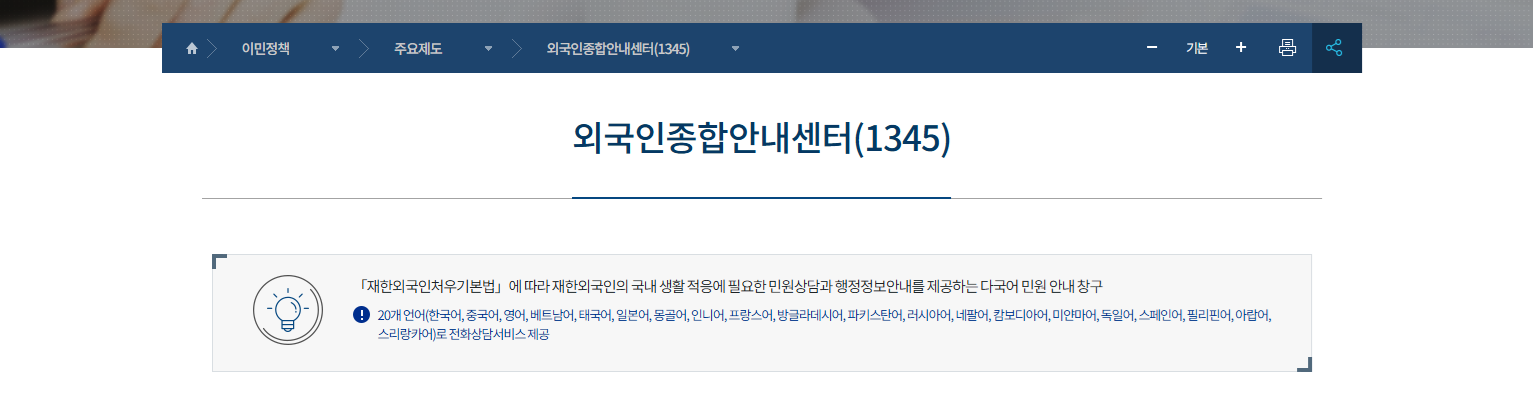
Foreign Residents Support Center 1345
Interpretation in 20 languages · Weekdays 09:00–22:00 · Stay, daily life & fraud counseling
-
Police Report 112
24 hours · BBB 3-way interpretation connection · Criminal report & emergencies
-
School International Office
First step for study-abroad agency disputes · Prevents academic and stay disadvantages
※ The Consular Call Center provides 24-hour interpretation in 7 languages including Vietnamese, Chinese, and Russian for citizen protection. 1345 operates on weekdays 09:00–22:00; after 18:00 only Korean, English, and Chinese are available.
1-(2)5 Common Types of Study-Abroad Agency Scams
The agency takes tuition and dormitory fees from students but never pays the school, then disappears. Most victims only discover the scam after receiving an "unpaid" notice from the school after enrollment.
Using lures like "guaranteed admission" or "enrollment without TOPIK," they collect a deposit, then either fail to get the student admitted at all or place them in a low-quality school.
They charge millions of won under names like document handling fees, interpretation fees, or "school referral fees" — costs that the school itself does not charge.
They forge bank balance statements or financial guarantee documents to obtain a visa. If caught, the student bears responsibility for visa cancellation and forced deportation.
After arriving in Korea, they say "you can't pay the school directly, so pay through us," then intercept the tuition and only pay part of it — or nothing at all — to the school.
1-(3)5 Steps to Report a Scam
Gather evidence
Screenshot and print all contracts, wire transfer receipts, KakaoTalk/WeChat conversations, recordings, and emails. Dates and transfer account numbers are key evidence.
Notify the School International Office
Notify your enrolled school first. The school can mediate disputes with partner agencies and help prevent academic and stay disadvantages.
Report to the Police Foreign Affairs Division
Call 112 in emergencies; otherwise visit the foreign affairs division of the nearest police station. The foreign affairs division handles cases involving foreigners and can arrange interpretation.
Report to Your Home Country Embassy
Inform the consular section of your home country's embassy in Korea. They may connect you with fellow nationals harmed by the same offender or cooperate with authorities in your home country.
File a Civil Damages Claim
Contact the Korea Legal Aid Corporation (132) or the school's legal counseling to explore a civil lawsuit to recover your money. This is separate from criminal charges.
1-(4)Multilingual Reporting & Counseling Channels
| Channel | Phone | Languages supported | Operating Hours | Main Purpose |
|---|---|---|---|---|
| Ministry of Foreign Affairs Consular Call Center | 02-3210-0404 | English, Chinese, Japanese, Vietnamese, French, Russian, Spanish (7 languages) | 24 hours | Fraud & emergency protection for nationals |
| Foreigner Info Center | 1345 | 20 languages (incl. Vietnamese, Uzbek, Mongolian, Chinese) | Weekdays 09:00–22:00 | Stay, daily life & fraud counseling |
| Police Report | 112 | BBB interpretation connection (multilingual) | 24 hours | Criminal report & emergencies |
| Home Country Embassy in Korea | Varies by embassy | Native language | Weekdays (24 hours for emergencies) | Protection of nationals |
| School International Office | Varies by school | Varies by school (English, Chinese, Vietnamese common) | Weekdays 09:00–18:00 | Study-abroad agency dispute mediation |
- Verify directly on the website whether the school is officially registered with the Korean Ministry of Education or the Korean Council for University Education (KCUE).
- Always send tuition to the school's official account in the school's name, and refuse transfers to personal or intermediary accounts.
- Check that the contract explicitly states refund and cancellation terms, and keep both the Korean original and a translation in your native language.
- Phrases like "guaranteed admission" or "100% visa guarantee" are all false promises. Admission and visa decisions are the authority of the school and the Ministry of Justice.
1-(5)Frequently asked questions
2. Stay/Immigration Inquiries
2-(1)Residency & immigration at a glance
Handle stay renewals before expiry, and report changes within 14 days
In Korea, almost every administrative task related to a foreigner's stay is handled in one of two ways. The first is applying online through the Hi Korea electronic civil services portal; the second is visiting the regional Immigration and Foreigner Office that covers where you live. This includes stay extensions, status changes, foreigner registration, and address changes. For in-person visits, an advance reservation is effectively mandatory, so going without one often means being turned away and returning another day. Above all, exceeding your stay-expiry date by even a single day incurs a fine, so the safest approach is to apply well before the expiry date with time to spare.
Hi Korea Electronic Civil Services
- Applications accepted 24 hours, no waiting
- Some stay extensions, re-entry permits, address changes
- Certified ID, electronic signature, scanned PDF/JPG required
- Registration card received by mail
Visit Regional Immigration Office
- All civil matters handled (incl. foreigner registration, status change)
- Advance reservation and in-person visit required
- Suitable for officer interviews and complex cases
- 1345 interpretation connection available (20 languages)
- Hi Korea hikorea.go.kr — Visa & stay electronic civil services (extensions, changes, re-entry permits, etc.)
- Foreign Residents Support Center 1345 — Phone guidance (multilingual)
- Visit Regional Immigration & Foreigner Office — Advance reservation required at the office under your jurisdiction
※ As of 2026, Hi Korea advance reservations are effectively mandatory for major civil matters such as stay extension, status change, and foreigner registration. Applications must be submitted by the expiry date; applications after the expiry date are subject to a fine.
2-(2)5-Step Procedure for Visiting the Immigration & Foreigner Office
Advance Reservation
Log in to Hi Korea → "Visit Reservation" → Select your regional office, date, and time. Available slots are often booked 1–2 weeks out, so make your reservation at least 1 month before expiry.
Prepare Documents
Prepare the integrated application form (Annex 34), passport, alien registration card, proof of residence (rental contract or dormitory confirmation), and additional documents required for your stay status (enrollment certificate, grades, bank statement, etc.).
Arrive at Reserved Time
Arrive 10–15 minutes before your reserved time, take a number and wait. Reservation holders are processed before walk-ins. If you need interpretation, call 1345 before entering to request 3-way interpretation in your native language.
Review & Fee Payment
After the officer interview and document review, if additional documents are requested, submit them within the specified deadline. Fees are paid on-site by card or bank transfer.
Result Notification & Collection
Results are typically notified within 7–14 days by text message or Hi Korea My Page. For ID reissuance, choose between mail delivery or in-person pickup.
Comparison: Hi Korea E-Services vs. In-Person Visit
| Item | Hi Korea Electronic Civil Services | Visit Regional Immigration Office |
|---|---|---|
| Available Services | Some stay extensions, re-entry permits, address changes, etc. | All civil matters (incl. foreigner registration, status change) |
| Preparation | Certified ID, electronic signature, scanned PDF/JPG files | Bring original documents |
| Processing Time | Typically 7–14 business days | Typically 7–14 business days (longer if documents need correction) |
| In-Person Visit | Not required (registration card received by mail) | Advance reservation and in-person visit required |
| Multilingual | Mainly Korean & English, some multilingual guidance | 1345 interpretation connection available (20 languages) |
| Advantages | No wait time · 24-hour application available | Suitable for complex cases · Officer interviews available |
2-(3)How to Find Your Regional Immigration & Foreigner Office
The office that has jurisdiction over your actual place of residence (dormitory or rented room address) — not your school — is your jurisdiction. If your school and your rented room are in different cities or provinces, your jurisdiction is determined by your rented room address.
Hi Korea → Enter your city/district in "Find Regional Immigration & Foreigner Office." Or tell 1345 your address and they will tell you right away.
If your place of residence (address) changes, you must report the address change to Hi Korea or the nearest Immigration & Foreigner Office within 14 days. Failure to do so incurs a fine.
You can bring a Korean speaker to the office, or call 1345 just before entering to request 3-way interpretation in your native language.
2-(4)Step-by-Step Response When Visa Expiry Is Approaching
Reserve & Check Documents
Make a Hi Korea visit reservation and review the document checklist for your stay status once more. Bank statements and enrollment certificates are often only accepted if issued within the past 30 days.
Obtain Documents & Pre-check
Get enrollment, academic record, and registration certificates from the school, and print your rental contract and bank statement. Show them to the school international office once to check for missing items.
Apply by the Expiry Date
For electronic services, apply by the day before expiry; for in-person visits, apply by the expiry date itself for normal processing. If the expiry date falls on a weekend, complete the application by the last weekday before it to be safe.
After Expiry — Contact 1345 Immediately
If your visa has expired, do not ignore it — contact 1345 immediately to report your situation, then visit the Immigration & Foreigner Office voluntarily to submit a statement of reasons. Voluntary reporting is treated far more leniently than forced deportation.
- When your stay period expires within 4 months (apply for extension)
- When you need to change visa type (D-4 → D-2, D-2 → D-10, etc.)
- When your residence address changes due to moving, etc. (within 14 days)
- When you lose or damage your alien registration card (reissuance)
- When you plan to leave Korea and return before your visa expires (re-entry permit)
- When you need a part-time work permit to start or change a job
- When inviting family members (parents, siblings) to Korea (visit/cohabitation D-3, etc.)
2-(5)Frequently asked questions
3. Voluntary Departure Guide
3-(1)Voluntary departure at a glance
Before forced deportation, voluntary reporting is far lighter
If your stay has already expired or your status has a problem, it's far better to report yourself first than to wait to be caught. Voluntary reporting can reduce or waive the fine and greatly shorten any re-entry ban, whereas being caught in a crackdown makes you subject to forced deportation with much heavier penalties. Immigration sometimes runs a temporary 'special voluntary-departure period' during which leaving on your own brings benefits like fine waivers and suspended re-entry bans (e.g., one ran 2025.12.01–2026.02.28). Always check with 1345 or HiKorea whether such a period is currently in effect. Reporting and resolving even small issues early is the way to protect your future chance to re-enter Korea.
Things to Prepare Before Voluntary Reporting
- Call 1345 to confirm your stay status (expiry date, days overstayed) in your native language
- Book a flight with a confirmed departure date
- Reserve a visit to the regional Immigration & Foreigner Office or file online via Hi Korea
- Settle outstanding matters before departure: unpaid wages, dormitory deposit, bank balance, etc.
- Obtain academic records, enrollment certificates, and graduation certificates from your Korean school in advance
If your visa has expired or you have a stay issue, reporting voluntarily and departing before being forcibly deported greatly reduces disadvantages such as re-entry restrictions.
- Voluntarily report to the regional Immigration & Foreigner Office
- Voluntary departure within a set period results in reduced fines and relaxed re-entry restrictions
- Treatment differs significantly from receiving a forced deportation order
※ During a temporary 'special voluntary-departure period' run by the Ministry of Justice (e.g., 2025.12.01–2026.02.28), benefits applied such as no fine, suspended re-entry restrictions, and waived parental penalties when leaving with a child under 17. Such periods are introduced from time to time, so always confirm with 1345 whether one currently applies to your case.
3-(2)Comparison: Voluntary Departure vs. Forced Deportation
| Item | Voluntary Departure (voluntary reporting) | Forced Deportation (crackdown/caught) |
|---|---|---|
| Re-entry Restrictions | Waived or short period (waived during special period) | Minimum 1 year to lifetime (depending on the case) |
| Fine | Reduced or waived | Full amount imposed (hundreds of thousands to over 10 million won) |
| Detention | None (free to remain at home/dormitory) | May be detained at a foreigner detention center |
| Departure Cost | Free to choose your own flight | At own expense + deportation at state cost leaves a record |
| Record | Recorded as "voluntary departure" | Permanently recorded as "forced deportation" |
| Future Visa | Normal application possible after restriction lifted | Visa denied for a period or permanently |
3-(3)5 Steps for Voluntary Reporting
Pre-consultation with 1345
Confirm your stay status (expiry date, visa type, days overstayed) in your native language. You will also be informed whether the Special Voluntary Departure Program applies to you.
Book Departure Flight
First book a flight with a confirmed departure date. Pre-reporting is difficult without a set date.
Pre-Report (in person or online)
Visit the regional Immigration & Foreigner Office or submit a voluntary report online via Hi Korea 3–15 days before your departure date.
Airport Check on Departure Day
4 hours before departure, go to the immigration office at the airport with your report, passport, and flight ticket for final confirmation.
Departure & Record
If processed as normal departure, a record of "voluntary departure" is made, and re-entry restrictions are waived or set to a short period.
When You Can Re-enter After Voluntary Departure
Fines and entry restrictions are waived. Once you meet the requirements for a new visa (school enrollment, employment, etc.), you can immediately apply for re-entry.
After paying a fine based on the number of days overstayed, re-entry restrictions are shortened (typically within 1 year). Re-entry is possible if there is a new visa reason.
Even with voluntary departure, re-entry restrictions of 1–5 years may be imposed. This is still far lighter than being forcibly deported.
Minimum 1 year, and depending on the case, 5 years, 10 years, or permanent. Once issued, obtaining a new visa is effectively blocked. This is why you must decide while voluntary departure is still an option.
3-(4)Things to Handle Together When Voluntarily Reporting
- Wage Claim — File a complaint with the Ministry of Employment and Labor 1350 or the regional labor office. Wage theft victims are protected even if they were undocumented.
- National Health Insurance Settlement — Pay any unpaid premiums in advance; if overpaid, apply for a refund. National Health Insurance Service foreigner-dedicated line 033-811-2000.
- Dormitory/Deposit Refund — Request a refund of your deposit and settlement of maintenance fees from the school or landlord in advance to receive the payment before departure.
- Cancel Phone & Bank Accounts — Cancel mobile phone automatic billing and withdraw/close bank account balances before departure.
- Academic & Grade Records — Obtain grade records, enrollment certificates, and graduation certificates from your Korean school in advance for future enrollment in your home country or another country.