Allowed job types, labor contracts, wages and taxes — here are the key things to know before you start working.
1. Allowed & Prohibited Job Types
1-(1)Permitted & prohibited jobs at a glance
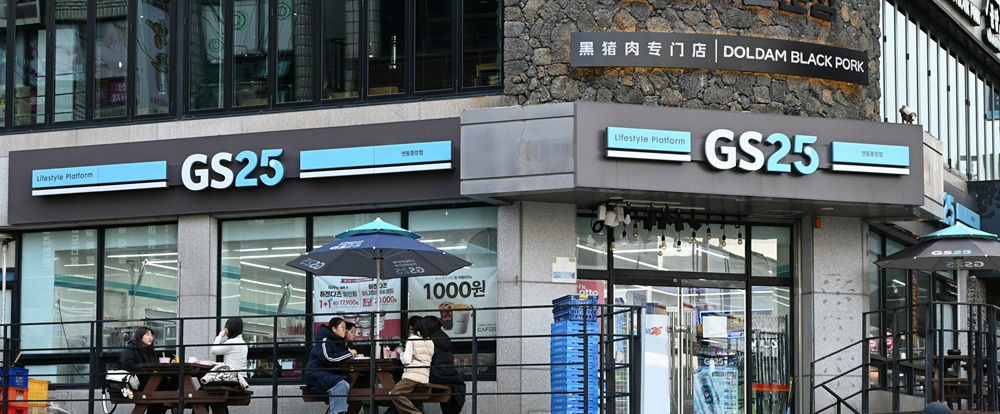
▪Even at the same establishment, it depends on the nature of the work
Simple assistant work at convenience stores, cafes, and restaurants is permitted, but entertainment bars, gambling establishments, adult-industry businesses, and unskilled construction labor are completely prohibited. What decides whether a job is allowed is not the shop's signboard but the business type listed on the business registration certificate, so it is safest to check this before you start. Even at the same establishment, the outcome can differ depending on the duties you take on — for example, if the nature of the work changes to a customer-serving "host/hostess" or a "delivery rider," it may fall outside your permitted scope and become illegal. A single change in job duties can cause visa problems, so judge carefully even when it seems minor.
Allowed Job Types
- Simple assistant work at convenience stores, cafes, and general restaurants
- Translation & interpretation (recognized as major-related)
- Department/lab teaching assistant, on-campus administrative support
- Exhibition & performance staff (excluding adult-oriented events)
Prohibited Job Types
- Host/hostess work at entertainment bars, karaoke bars, and clubs
- Casinos and gambling game centers
- Massage, body massage, and other adult service businesses
- Delivery app riders and unskilled construction day laborers
1-(2)Detailed Classification of Allowed Job Types
There are roughly 5 types of work permitted for international students. Even at the same establishment, whether a job is allowed or prohibited depends on what tasks you actually perform — so you need to check not just the business type but also the actual content of the work.
| Type | Representative Duties | Precautions |
|---|---|---|
| Simple Assistance | Floor/kitchen assistant at convenience stores, general restaurants, and cafes | Check business registration type for establishments with a high proportion of alcohol sales |
| Major-Related | Major-related office assistance, data organization, research support | Recommended to attach documentation proving connection to your major |
| On-Campus Activities | Department/lab teaching assistant, library and international affairs office support | May be exempt from permit if it is scholarship/work-study in nature |
| Translation & Interpretation | Native language↔Korean translation, event interpretation | Teaching at academies or private tutoring is a separate matter and not permitted |
| Arts & Culture | Exhibition support, performance staff, cultural event management | Entertainment and adult-oriented events are excluded |
1-(3)Detailed Classification of Prohibited Job Types
The following job types either cannot receive a part-time work permit at all, or working in them is a violation even if you hold a permit.
| Category | Applicable Job Types | Legal Basis |
|---|---|---|
| Entertainment | Karaoke bars, entertainment bars, club host/hostess, karaoke room attendants | Prohibition on entertainment service workers under the Food Sanitation Act |
| Gambling | Casinos, horse racing tracks, cycling tracks, gambling game centers | Establishments subject to the Gambling Activities Regulation Act |
| Adult Services (Massage) | Massage, body massage, businesses primarily serving opposite-sex customers | Subject to the Adult Entertainment Business Regulation Act |
| Multi-level Marketing & Door-to-door Sales | Multi-level sales and door-to-door sales positions | Difficult to prove legal employment due to employment structure |
| Transportation (Off-hours) | Delivery app riders, late-night freight transport | Universally prohibited due to safety and management concerns |
| Unskilled Construction Labor | Construction site day laborers (without qualifications) | Subject to immediate deportation order upon a single violation |
1-(4)Allowed or prohibited? — Case-by-case judgment
Permitted. However, on weekdays during the semester you may only work within the allowed weekly hours (30 hours per week for undergraduates, or 10 hours if the TOPIK requirement is not met). Night shifts do not grant additional hours, and there is no hour limit on weekends, public holidays, or vacations.
Not permitted. Riders for delivery agencies are not eligible for a work permit. This is different from occasionally making a delivery while doing other work at the same establishment.
It depends. Beer and chicken restaurants registered as general restaurants allow floor/kitchen assistant work. Establishments registered as entertainment bars or karaoke bars are completely prohibited. Always check the business type on the business registration certificate.
Not permitted. Work in which you sit next to and attend to customers ("host/hostess") violates the Food Sanitation Act and the Adult Entertainment Business Regulation Act and is not eligible for a permit.
Permitted. It qualifies as simple assistance. However, if delivery is also included at the same cafe, the delivery portion may be problematic, so the scope of duties must be clearly stated in the work contract.
Not permitted. Teaching at academies, working at foreign language academies or kids cafes for children, and one-on-one private tutoring are not recognized as part-time work. Separate qualifications and residency status are required.
The following positions are often introduced through the school's international affairs office or department office, and the internal procedures are relatively straightforward.
- Department/lab teaching assistant (TA/RA)
- Korean↔native language translation and on-campus event interpretation
- Campus cafe, convenience store, and bookstore assistant
- Library, computer lab, and international affairs office administrative support
1-(5)Frequently Asked Questions
2. Labor Contracts, Wages & Taxes
2-(1)Employment contracts, wages & taxes at a glance
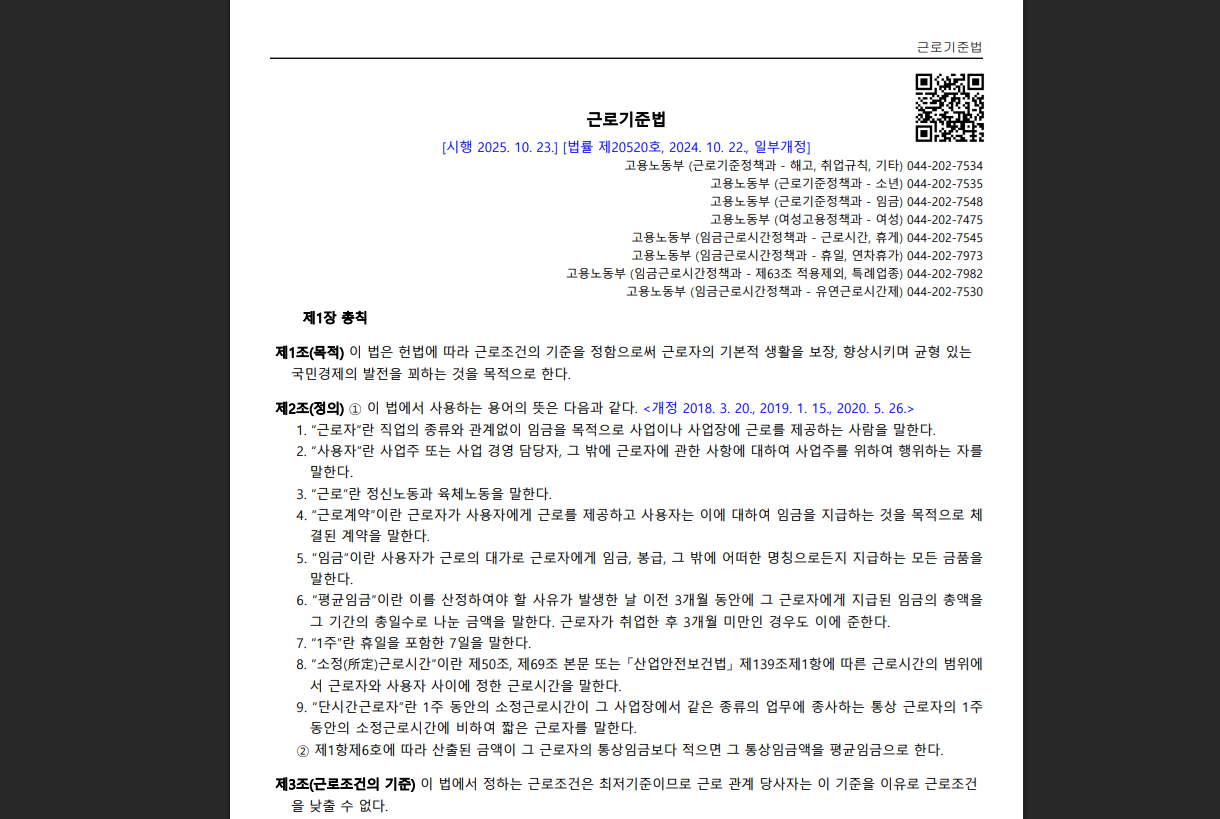
▪Foreigners receive the same protections under the Labor Standards Act as Korean nationals
Foreign workers are protected by the Labor Standards Act exactly the same as Koreans, and the single most important step is to receive a written labor contract before you start working. Paying below the minimum wage (10,320 won in 2026), failing to pay wages on time, or not providing a contract at all are all clear violations of the law. If conditions are only promised verbally, no evidence remains when a dispute later arises, so everything must be put in writing. The contract, bank transfer records, and pay statements are the key evidence that protects you when problems occur, so it is important to keep them carefully from the very beginning.
-
Minimum Hourly Wage (2026)
10,320 won — paying below this is illegal and subject to a minimum wage violation report
-
Weekly Holiday Allowance
When working 15 hours or more per week without absence: (average weekly working hours ÷ 5 days) × hourly wage paid separately
-
Night, Holiday & Overtime Premiums
Night work (22:00–06:00), holiday work, and overtime exceeding 8 hours are paid at 50% premium (workplaces with 5 or more regular employees)
-
Industrial Accident Insurance
Mandatory coverage regardless of nationality or working hours. If injured at work, you can apply directly to the Korea Workers' Compensation & Welfare Service (1588-0075)
You must receive a written labor contract before starting work. Foreign international students receive the same protections under the Labor Standards Act as Korean nationals, and paying below minimum wage, withholding wages, and not providing a contract are all violations of the law.
2-(2)8 Required Items in a Labor Contract
State the base hourly rate and included items accurately (whether meals and transportation are separate). Below the minimum wage of 10,320 won is illegal.
Specify start and end times and total weekly working hours. Must not exceed the hours permitted by the visa (e.g., 30 hours per week on weekdays during the undergraduate semester, or 35 hours for master's/doctoral students).
At least 30 minutes must be guaranteed for 4 hours of work, and at least 1 hour for 8 hours of work (Labor Standards Act Article 54).
Specify at least one paid day off per week (weekly holiday). Weekly holiday allowance accrues when working 15 hours or more per week.
Paid on a fixed date each month (e.g., the 10th of each month). If only a verbal promise like "I'll pay you after work" is made, there is a high risk of disputes.
Must give 30 days' notice or pay 30 days of ordinary wages (advance termination notice allowance). Unilateral same-day dismissal constitutes unfair dismissal.
Confirm that industrial accident insurance applies if injured at work. Industrial accident insurance is mandatory for all workers.
Fixed-term (e.g., 3 months) or indefinite. Must be set within the part-time work permit period.
2-(3)Hourly wage calculation example (2026 minimum wage 10,320 won)
| Weekly working hours | Base wages | Weekly holiday allowance | Weekly total |
|---|---|---|---|
| 15 hours/week | 10,320 won × 15 = 154,800 won | 10,320 won × 3 = 30,960 won | 185,760 won |
| 30 hours/week (undergraduate semester weekday limit) | 10,320 won × 30 = 309,600 won | 10,320 won × 6 = 61,920 won | 371,520 won |
| 35 hours/week (master's/doctoral semester limit) | 10,320 won × 35 = 361,200 won | 10,320 won × 7 = 72,240 won | 433,440 won |
2-(4)Wages & Taxes Guide
- Cash vs. bank transfer: Bank transfer is the most reliable evidence in the event of a dispute.
- Obligation to provide pay statement (Labor Standards Act Article 48) — must include payment amount, deduction details, and calculation basis.
- Daily wage vs. monthly salary: Daily wages are common for short-term work; monthly salary for long-term.
- If you don't have a Korean bank account, you can open one at a commercial bank using your Alien Registration Card.
- Income tax & local income tax: Daily labor is typically withheld at 3.3%.
- Industrial accident insurance: Mandatory enrollment (regardless of working hours or nationality).
- Health insurance: International students residing for 6 months or more are subject to regional enrollment.
- National pension & employment insurance: D-2/D-4 visa holders are not subject to mandatory enrollment.
If 3.3% was withheld from daily labor wages, you may be able to receive a refund by filing a comprehensive income tax return in May of the following year. Refunds are common for foreign international students with low annual income.
File after personal authentication at the National Tax Service Hometax (hometax.go.kr). If Korean is difficult, use the National Tax Service consultation hotline (126, no area code needed).
Accidents at work or during commute can be covered by industrial accident insurance for medical expenses and lost-wage benefits. Foreign international students are covered the same way.
Even if the employer refuses to file for workers' compensation, you can apply directly to the Korea Workers' Compensation & Welfare Service (1588-0075). See a doctor immediately after the accident and keep the diagnosis certificate and proof of employment.
A single labor contract protects you when a dispute arises. Make sure to get a written contract before starting work.
2-(5)Frequently asked questions
3. Job Type-by-Type Work Guide
3-(1)Job-by-job work guide at a glance

▪Hourly wage, required Korean level, and precautions differ by job type
From convenience stores, cafes, and restaurants to academy assistants, translation, and logistics centers, knowing in advance the characteristics of the job types international students often work in makes it much easier to avoid unfair treatment. This is because each industry has its own hourly wage rates, required Korean level, and points to watch out for. Hourly pay differs between the metropolitan area and non-metropolitan areas, and between daytime and nighttime, so even the same work can pay differently depending on region and time slot. In addition, as your Korean level rises you can take on better roles such as customer service or interpreting/translation, which widens your room for wage negotiation — so improving your Korean directly leads to better jobs.
Scam Job Identification Checklist
- Does not require upfront payment (deposit, training fee)
- Does not ask you to send photos of your ID, bank book, or debit card
- Does not offer an abnormally high hourly wage (e.g., 300,000 won per day for remote work)
- Does not involve a multi-level marketing or referral bonus structure
- Does not refuse to sign a labor contract
- The job posting clearly states the business registration number and the employer's real name
Here is a summary of job types that foreign international students frequently work in. Knowing the hourly wage, required Korean level, and precautions in advance makes it easier to avoid unfair treatment. This site does not introduce or broker jobs; it only provides information you should know to work legally.
3-(2)Job Types Frequently Worked by International Students (for reference)
Cashiering, stocking, cleaning. Many shifts involve working alone at night, so safety checks are essential. Ability to handle numbers and simple customer interactions in Korean is required.
Taking orders, making drinks, cleaning. Pronouncing Korean menu names and handling payment is key. Check whether a hygiene cap and apron are provided.
Taking orders, serving, cleaning up. Hourly wage is relatively high (cases of 12,000–15,000 won reported). Work intensity is high during company dinners and peak hours.
Supervising self-study and grading assistance. Note that foreign international students who wish to teach directly as "instructors" need separate qualifications. Confirm the scope of assistant duties.
A field where you can leverage your major and language skills. Wage negotiation is advantageous with TOPIK Level 5 or above. Many freelance contract arrangements.
Product sorting and packaging. Low Korean language demand and hourly wages tend to be above average. Many night shifts and heavy labor, so physical demands are high.
3-(3)Hourly Wage Market Rates by Job Type (for reference)
| Job Type | Metro Area Daytime | Metro Area Nighttime | Non-Metro Daytime | Non-Metro Nighttime |
|---|---|---|---|---|
| Convenience Store | 10,320–11,000 won | 11,500–13,000 won | 10,320 won | 11,000–12,500 won |
| Cafe | 10,320–12,000 won | 12,000–13,500 won | 10,320–11,000 won | 11,500–12,500 won |
| Restaurant Serving | 12,000–15,000 won | 14,000–17,000 won | 10,500–12,500 won | 12,000–14,000 won |
| Academy Assistant | 11,000–14,000 won | - | 10,500–12,000 won | - |
| Translation & Interpretation | Per-project or hourly negotiation (TOPIK Level 4 or above: from 15,000 won) | |||
| Logistics Center | 11,000–13,000 won | 13,500–16,000 won | 10,500–12,000 won | 12,500–14,500 won |
※ Compiled from market reports as of May 2026. Large variation depending on workplace, experience, and Korean language level. Below the minimum wage (10,320 won) is illegal.
- Prepare a 30-second Korean greeting and self-introduction. Start with "안녕하세요, ○○대학교 ○학년 ○○○입니다" (Hello, I am ○○○, a ○th-year student at ○○ University).
- Resume: Use a Korean format (Albamon or Albachunguk basic template). A neat, formal-style photo is recommended.
- Attire: A clean shirt and sneakers are sufficient. Black pants and a white shirt are a safe choice for restaurants and cafes.
- Bringing a copy of your part-time work permit in advance will increase your credibility.
- When asked "How many hours can you work?", clearly state your visa limit (e.g., "I can work up to 30 hours per week on weekdays during the semester").
3-(4)Recommended Korean Language Level by Job Type
| Job Type | Recommended TOPIK Level | Main Korean Language Use Situations |
|---|---|---|
| Convenience Store | Level 3 or above | Price and payment handling, location guidance, simple customer questions |
| Cafe | Level 3 or above | Taking menu orders, confirming size and options |
| Restaurant Serving | Level 4 or above | Menu explanations, handling fast-paced company dinner service, complaint handling |
| Academy Assistant | Level 4 or above | Handling students and parents, grading and self-study guidance |
| Translation & Interpretation | Level 5 or above | Ability to understand and produce specialized vocabulary |
| Logistics Center | Level 2–3 | Understanding work instructions, recognizing safety signs |
- Convenience store nights: When working alone, check the location of the emergency bell and CCTV. Familiarize yourself with the manual for handling unknown customers.
- Cafe & serving: Complaints may increase due to pronunciation and honorific speech. Discriminatory remarks about foreign accents are subject to reporting to 1331.
- Academy: For foreign international students to teach directly as "instructors," separate qualifications and a permission to perform activities outside residency status are required. Exceeding the scope of assistant duties is a violation.
- Logistics center: You can refuse unreasonable heavy lifting and forced long overnight work. Report immediately if an industrial accident occurs.
- School international affairs office & bulletin board: High safety as these are employer positions vetted by the school.
- Albamon (albamon.com) & Albachunguk (alba.co.kr): Search using the "foreigner eligible" filter.
- Danggeun (second-hand trading app): Local job board. You can verify the employer's own profile.
- Foreign Workers' Support Center & Danuri: Some centers provide information on foreigner-friendly workplaces.
- Check that the job posting clearly states the business registration number and employer's real name.
- 1. Upfront payment requests — "Guarantee a job if you deposit a security fee/training fee first" is 100% a scam.
- 2. Requesting submission of ID, bank book, or debit card — Asking you to send photos is a risk of ghost accounts and identity theft. Never send them.
- 3. Abnormally high hourly wages — "300,000 won per day from home" type postings recruit money mule carriers for voice phishing and money laundering.
- 4. Multi-level marketing or remote marketing — "Extra pay for introducing friends" structure may be illegal multi-level marketing.
- 5. Refusing to sign a labor contract — Places that say "just come and work" have a high chance of wage withholding.
If victimized: Police 112, report cybercrime via 112 → Cybercrime Reporting System (ECRM), Financial Supervisory Service 1332.